Abrasion Testing: Predicting Service Life
flexED Knowledge Base
06/23/2026

Table of Contents
- Abrasion Testing: Predicting Service Life Instead of Guessing
- Why Abrasion Causes So Many Hose Failures
- Abrasion Can Be Measured
- Why Different Hose Constructions Wear Differently
- Understanding DIN Abrasion Testing
- Why Laboratory Testing Doesn’t Predict Exact Service Life
- The Five Variables That Most Influence Service Life
- Moving From Reactive to Predictive Maintenance
- Engineering Longer Hose Life
Abrasion Testing: Predicting Service Life Instead of Guessing
The service life of a hose depends on dozens of variables, including the material being conveyed, particle size, velocity, hose routing, operating temperature, and installation practices. Because of these variables, many operators treat abrasion as unpredictable.
The reality is that abrasion is one of the most measurable failure mechanisms in industrial hose applications. While no test can predict the exact life of a hose in every application, modern abrasion testing standards and field experience allow users to make significantly better decisions than simple trial and error.
Why Abrasion Causes So Many Hose Failures
Abrasion remains one of the leading causes of premature hose replacement across industries ranging from vacuum truck operations and material handling to agriculture, construction, mining, and manufacturing. External abrasion occurs when a hose repeatedly contacts rough surfaces such as concrete, steel, gravel, or equipment structures. Internal abrasion occurs when materials moving through the hose gradually erode the tube from the inside.
The challenge is that abrasion often develops slowly. Unlike a burst hose or a sudden pressure failure, abrasion removes material little by little until the hose reaches a point where safe operation can no longer be maintained.
“Abrasion remains one of the most common causes of hose damage and failure in industrial applications, making proper hose selection and maintenance critical to maximizing service life.” – NAHAD Hose Safety Institute
By the time the failure becomes obvious, the wear process has often been occurring for an extended period of time.
Abrasion Can Be Measured
One of the biggest misconceptions surrounding abrasion is that it cannot be quantified.
In reality, internationally recognized standards such as ASTM D5963 and ISO 4649 provide repeatable methods for evaluating abrasion resistance. According to Smithers, a leading testing and materials science organization, these standards provide a controlled method for measuring wear resistance and comparing rubber compounds under identical conditions.
Often referred to throughout industry as DIN abrasion testing, these procedures measure how much material is lost when a test sample is exposed to a controlled abrasive surface.
These tests do not tell us exactly how long a hose will last in a specific application, but they do provide valuable comparative data that helps engineers evaluate material performance before installation.
This is important because many purchasing decisions are still made based primarily on initial cost. When viewed through the lens of abrasion resistance and expected service life, however, the lowest-cost hose is not always the lowest-cost solution.
Why Different Hose Constructions Wear Differently
Not all abrasion challenges are the same. For example, a hydro excavation contractor conveying abrasive slurry faces a different wear mechanism than a woodshop dust collection system or an agricultural operation moving grain. This is why hose construction matters.
Some hose designs prioritize flexibility and lightweight handling. Others prioritize chemical compatibility or temperature performance. Others are specifically engineered for severe abrasion environments where wear resistance is the primary concern.
At Kanaflex, this can be seen across multiple product families.
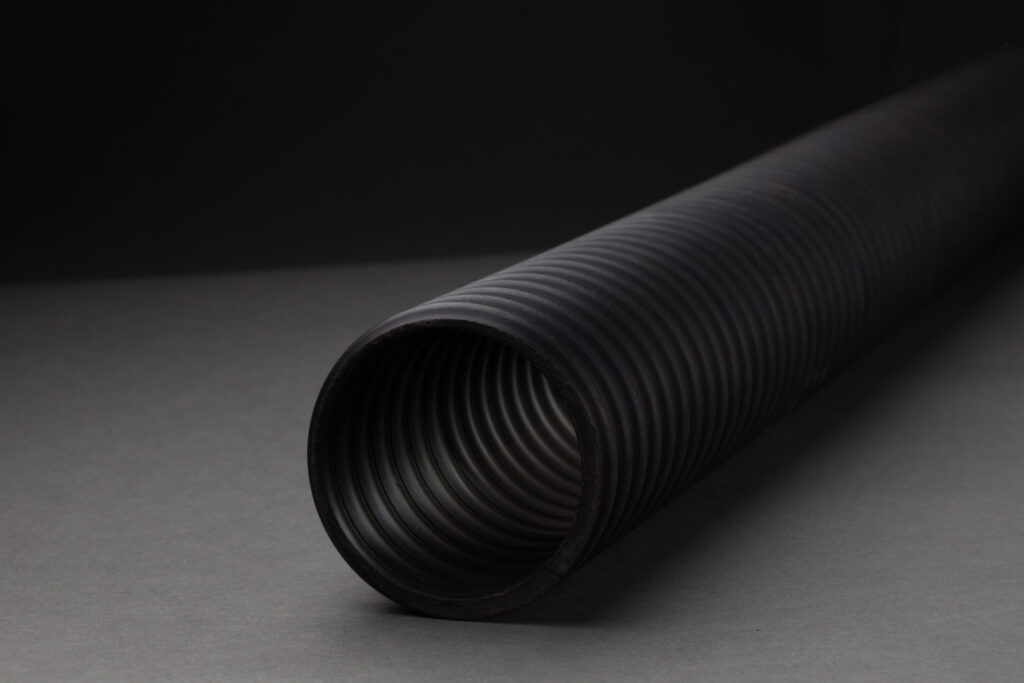
For example, the \\\\\ flexVAC™ 180 AR is designed specifically for abrasive material handling applications commonly found in vacuum truck operations, industrial cleanup, and pneumatic conveying. Its abrasion-resistant construction helps withstand the harsh environments where conventional hose materials may wear prematurely.
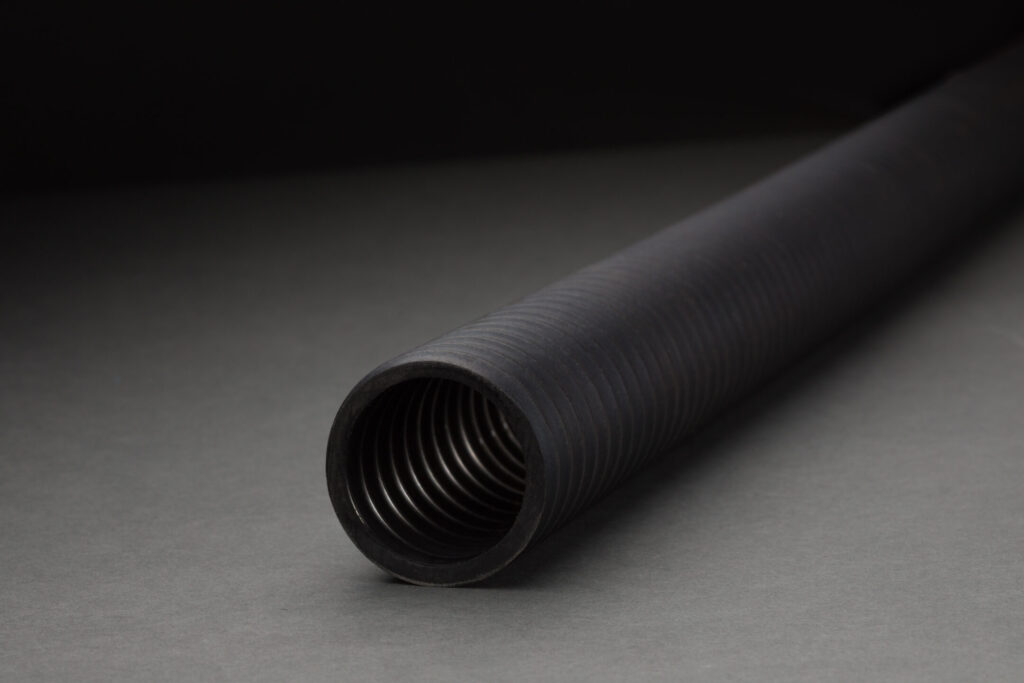
Abrasion resistance is not limited to vacuum hose applications. The \\\\\ flexCHEM™ 220 RS incorporates an abrasion-resistant UHMWPE tube designed for demanding chemical transfer applications where both chemical compatibility and wear resistance are critical. In these environments, the hose must withstand not only aggressive chemicals but also the abrasive effects of flowing materials and repeated service cycles.
Understanding DIN Abrasion Testing
Because abrasion is such a common failure mode, engineers have spent decades developing methods to measure it.
One of the most widely recognized methods is ASTM D5963, which aligns closely with ISO 4649. During testing, a material sample is pressed against a rotating abrasive surface under carefully controlled conditions. The amount of material removed is then measured and reported as volume loss. The result provides a standardized method for comparing one material against another. This creates something extremely valuable: a common language.
Testing allows engineers and users to compare materials using measurable data rather than marketing language. That doesn’t eliminate the need for field experience, but it provides a much stronger starting point for evaluating performance.
Why Laboratory Testing Doesn’t Predict Exact Service Life
This is where many people misunderstand abrasion testing. A DIN abrasion result is not a guarantee of hose life. Real-world performance depends on numerous operating variables. A hose conveying dry silica sand behaves differently than a hose conveying plastic pellets. One that is operating continuously behaves differently than one used intermittently. A hose exposed to elevated temperatures may experience different wear characteristics than the same hose operating at room temperature.
“Hose service life depends heavily on actual operating conditions, maintenance practices, routing, environmental exposure, and application-specific variables.” – Parker Industrial Hose Safety Guide
This distinction is important. Abrasion testing predicts relative material performance. Field conditions determine actual hose life.
The Five Variables That Most Influence Service Life
1. Material Being Conveyed
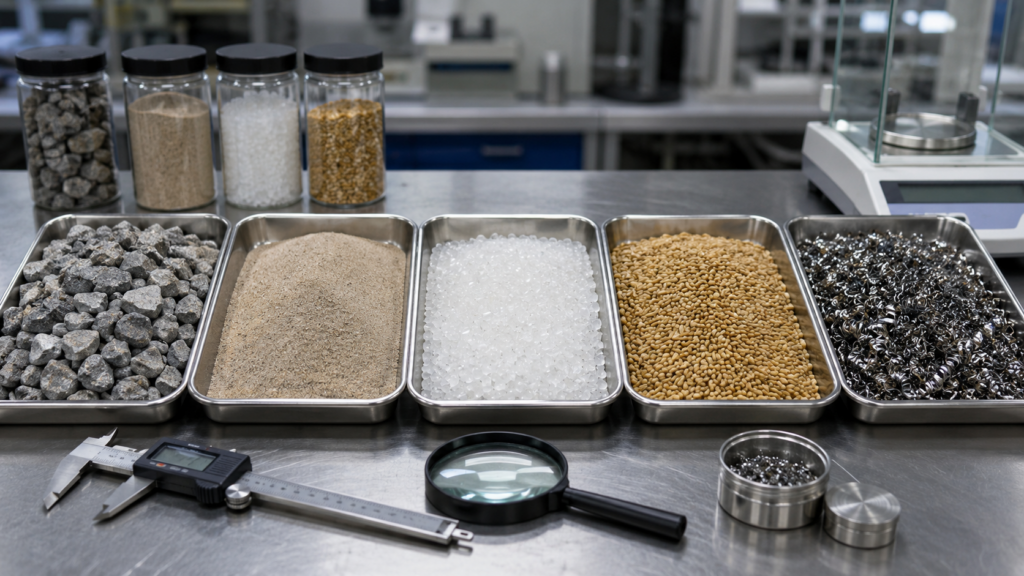
The characteristics of the material moving through the hose are often the single largest factor affecting wear. Crushed stone, sand, metal shavings, plastic pellets, mulch, grain, and powders all create different wear patterns. In many cases, understanding the material being conveyed can reveal more about expected hose life than any specification sheet.
2. Velocity
As velocity increases, particle impact energy increases. This is particularly important in pneumatic conveying and vacuum applications. Higher transfer speeds often improve productivity, but they can also dramatically accelerate wear. A hose that performs well at one velocity may experience significantly reduced service life at another. Finding the proper balance between throughput and longevity is often one of the most effective ways to reduce maintenance costs.


3. Routing
Wear rarely occurs uniformly throughout a hose. Bends and directional changes often create concentrated impact zones where particles repeatedly strike the same section of the hose wall. Many recurring failures can be traced back to routing issues rather than hose selection issues. Improving routing, increasing bend radius, or reducing unnecessary directional changes can often extend hose life without changing products.
4. Temperature
Temperature can significantly influence abrasion performance. Higher temperatures may soften materials and alter wear characteristics. Lower temperatures may reduce flexibility and increase susceptibility to cracking. In many cases, temperature acts as a multiplier rather than an independent failure mechanism. A hose exposed to elevated temperatures may not fail because of temperature alone. Instead, temperature accelerates the effects of abrasion, flexing, vacuum, pressure, and other stresses. We explored this concept in greater detail in our recent flexED™ article, Temperature: The Most Ignored Hose Killer.

5. Mechanical Abuse
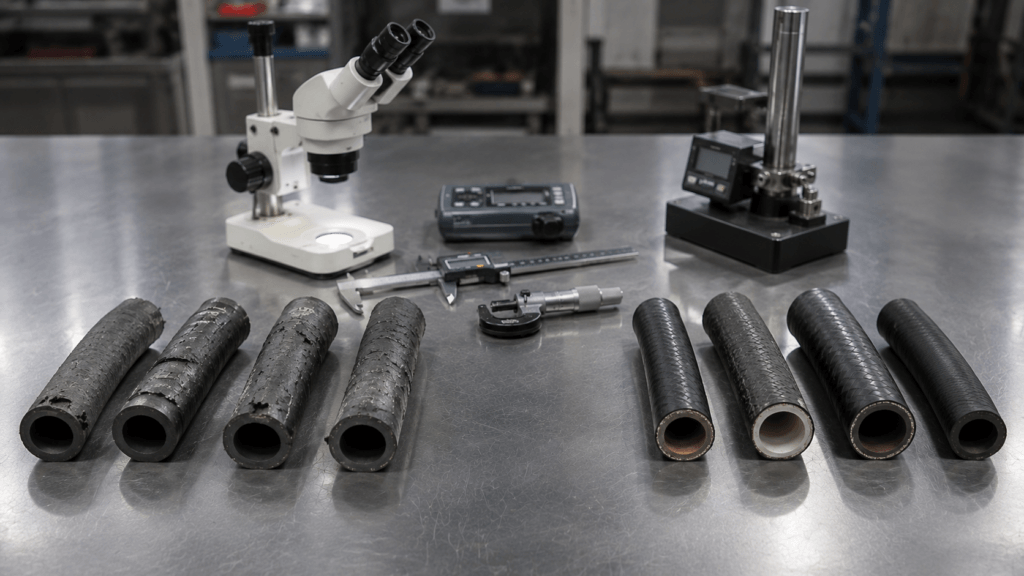
Dragging hoses across concrete. Pulling hoses around corners. Allowing hoses to rub against steel structures. Repeated mechanical contact can dramatically reduce service life regardless of the material being conveyed. Even the most abrasion-resistant hose can wear prematurely if installation and handling practices are poor. This is why inspection and training remain essential components of any successful hose management program.
Moving From Reactive to Predictive Maintenance
The most successful hose programs do not wait for failure. They monitor wear.
Routine inspections allow operators to identify:
- Accelerated wear zones
- Cover loss progression
- Changes in wear patterns
- Repetitive failure locations
Over time, this information creates something far more valuable than a manufacturer’s specification sheet. It creates application-specific performance data.
This is where service life becomes predictable. Not because a chart says the hose should last a certain number of hours, but because historical performance data begins to reveal patterns. Organizations that document wear progression often become remarkably accurate at predicting replacement intervals. The result is reduced downtime, improved safety, and lower overall operating costs.
Engineering Longer Hose Life
In many cases, service life can be improved before a hose is ever installed.
Potential solutions include:
- Selecting more abrasion-resistant constructions
- Improving hose routing
- Increasing bend radius
- Reducing conveying velocity
- Minimizing dragging and rubbing
- Installing wear protection
- Conducting regular inspections
Often, small changes in application design can produce larger improvements than simply switching products. The goal should not be replacing worn hoses more efficiently. The goal should be understanding why the wear is occurring in the first place.
flexED™ Takeaway
You may never predict the exact life of a hose, but you can stop treating abrasion like a mystery. Understanding the factors that drive wear and selecting hose constructions designed for those conditions is one of the most effective ways to improve reliability, reduce unexpected failures, and lower total operating costs.
Sources & References
ASTM D5963 / ISO 4649 Abrasion Testing (Linked)
- Smithers – ASTM D5963 & ISO 4649 Testing Overview
- MonTech – DIN Abrasion Testing According to ASTM D5963 & ISO 4649
Industrial Hose Guidelines (Linked)
Hose Safety & Service Life (Linked)
Related Kanaflex Resources (Linked)
About flexED™
flexED™ is Kanaflex’s educational platform focused on hose applications, best practices, and technical knowledge. Our goal is simple: help users make better hose decisions, improve reliability, and get more from every hose in service.